
There’s a quote I keep coming back to: “There are decades when nothing happens, and then there are weeks when decades happen.” This is one of those weeks.
As I stood on the beach this morning collecting my thoughts, I found myself returning to a framework that has shaped our investment thinking for nearly a decade now — the concept of deglobalization.
A Trend a Decade in the Making
Most people date the current era of global disruption to COVID, or maybe to Russia’s invasion of Ukraine. But for those of us who have been watching closely, the first real signal came in 2016 with Brexit — Britain’s vote to exit the European Union.
At the time, it might have seemed like an isolated political event. But we saw it for what it was: the first meaningful counter-trend move against the prevailing force of globalization — that decades-long deepening of trade ties, lowering of barriers, and free flow of people and capital that had defined the post-World War II world order.
From that moment, we’ve been building a thesis: that we are living through the most consequential reversal of a global trend in 80 years. And with every passing year — Brexit, Ukraine, and now the latest developments with Iran — that thesis continues to be validated.
The Straits of Hormuz: The World’s Pressure Point
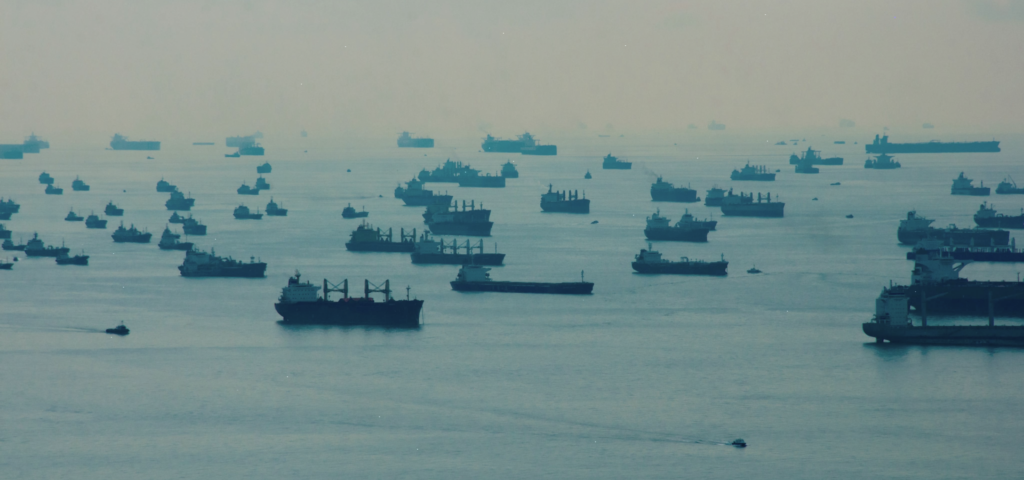
The event I’m watching most closely right now is what unfolds over the next few weeks in the Straits of Hormuz — the narrow stretch of water through which Arab nations move approximately 20% of the world’s crude oil, along with significant volumes of LNG and fertilizer.
History offers us a useful case study. When the Houthi tribal group in Yemen began targeting container ships in the Red Sea, they managed to suppress traffic through that corridor by as much as 80–90% for a sustained period — with relatively limited resources. Iran, even in its currently degraded state following recent U.S. and Israeli strikes, commands far greater capabilities.
If the Straits of Hormuz were effectively closed for any meaningful stretch of time, we could be looking at what I’d call an inverse COVID moment.
Think about it this way: COVID was an oil demand shock — the world stopped moving and consumption cratered. A closure of Hormuz would be an oil supply shock — suddenly, 20% of global crude supply disappears from the market. The market always finds equilibrium, but the mechanism for doing so would be a dramatic spike in prices, forcing demand destruction across the global economy.
Energy Is the Breath of Life
There’s an old saying: you can go two months without food, two weeks without water, and two minutes without air. Energy, I’d argue, is the economic equivalent of oxygen.
When you constrain energy supply, you don’t just affect the price at the pump. You affect the cost of producing virtually everything in our material world — agriculture, manufacturing, transportation, food production. The supply chains are deeply intertwined, and the ripple effects are enormous.
The Bigger Picture: Two Armed Camps
Stepping back, what we’re witnessing is the continued fracturing of the post-war global order into two increasingly defined blocs: China, Russia, and their allies on one side; the U.S., Israel, and our allies on the other. This has been a ten-year trend — it shouldn’t surprise anyone.
What we think will surprise people is the speed and scale at which markets begin pricing this new reality.
What It Means for Investors
These are not comfortable times. But for investors who are willing to keep an open mind, study supply and demand dynamics, and understand the cause-and-effect relationships that drive global commodity markets — there are opportunities here.
The scope of what may be unfolding is unlike anything most of us have lived through. But that’s precisely what creates the conditions for significant market moves, and the potential for significant returns for those who are positioned correctly.
Buckle up, everybody. It’s going to be interesting.